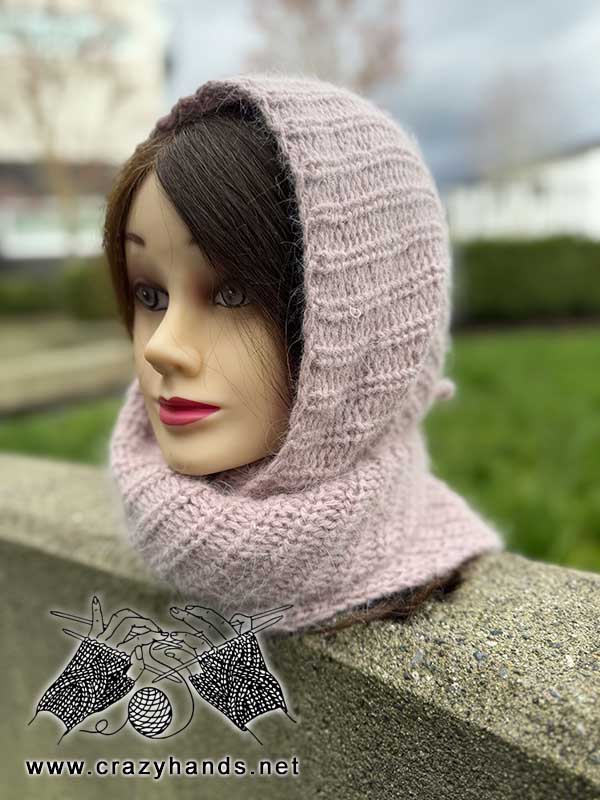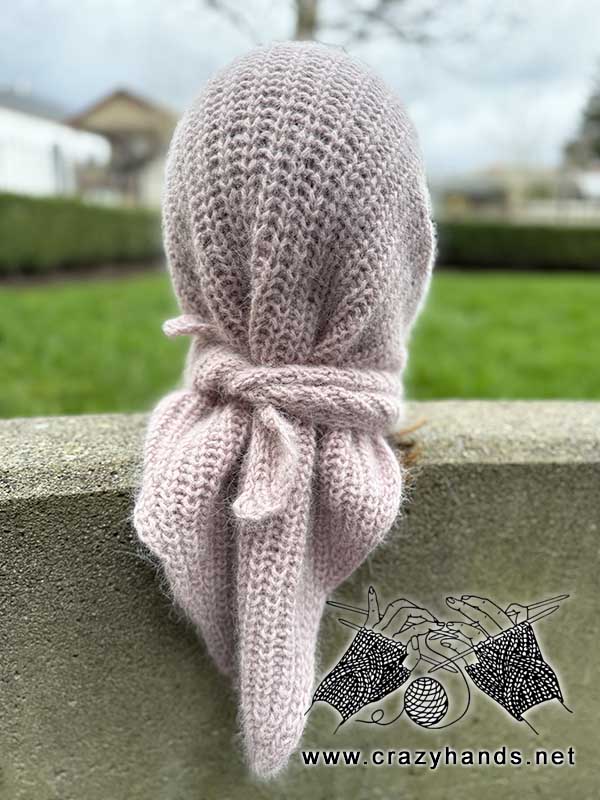

Contents
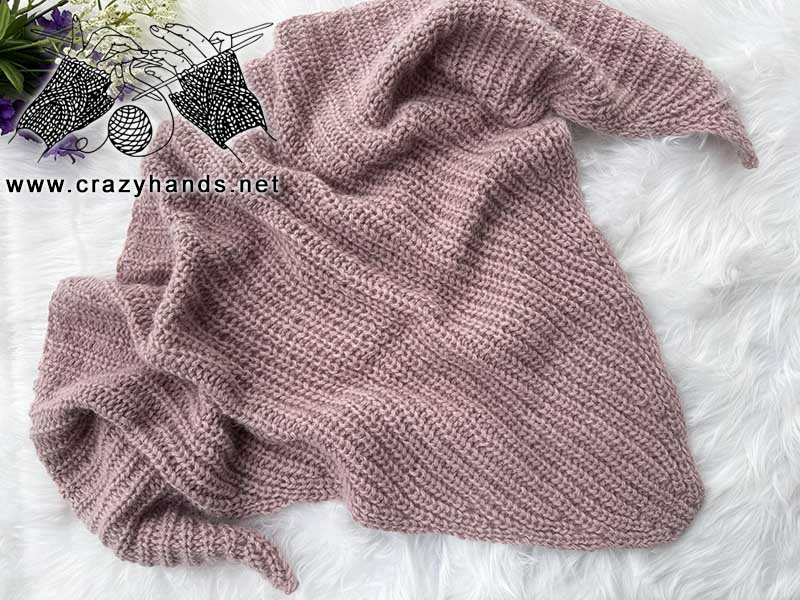
Knitting materials and tools:
Circular 32 in/80cm 5 mm (US 8 / UK6).
Long mink wool (Cashmere) yarn – 75% wool, 25% nylon: 50 grams – 340 m per skein. Note: Knit with 2 strands of main and 1 strands of reinforcing (partner) yarn together. Quantity: 2.5 balls.
Knit baktus scarf size:
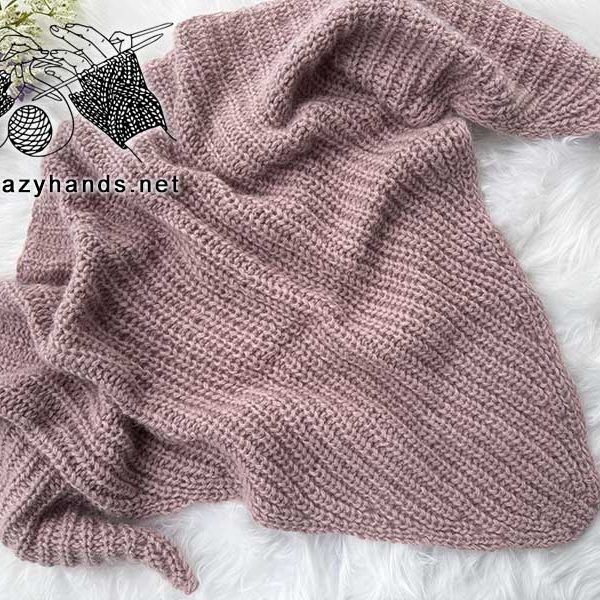
Size: 130*65 cm (51×25 in)
Gauge: 19 stitches = 10 cm (4 in) in stockinette
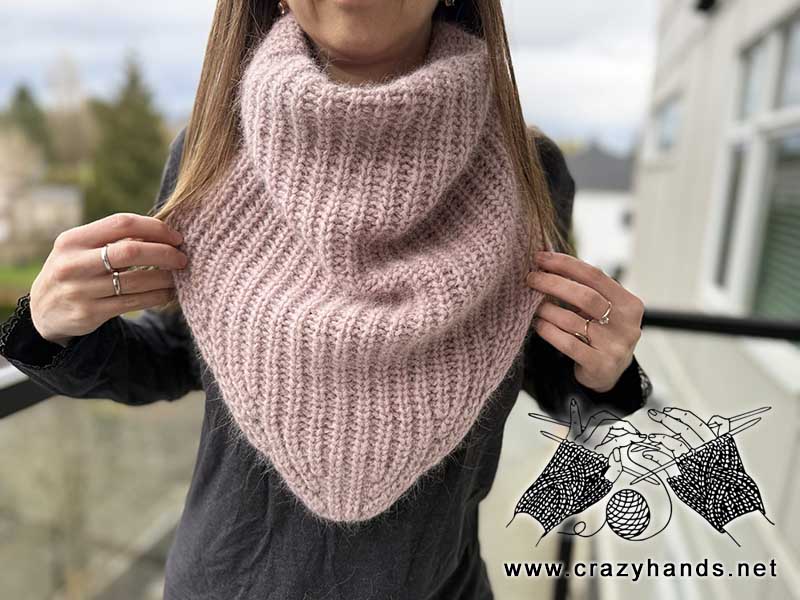
Common abbreviations of knitting stitches:
k – knit
p – purl
k1b – knit one below
sel s – selvage stitch: always slip the first stitch knitwise, work to the last stitch, purl the last stitch
yo – yarn over: Lay the working yarn over the right needle from front to back.
ryo – reverse yarn over: Lay the working yarn over the right needle from back to front.
Inc – increase: Knit 1 below into the next stitch without dropping it from the left needle, yo, k1 below into the same stitch again; then drop the stitch from the left needle. 2 sts increased.
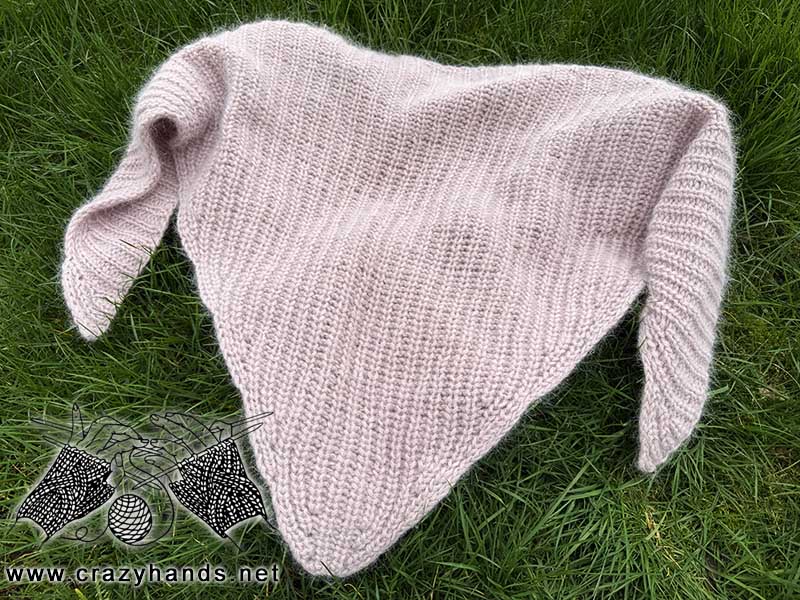
Baktus scarf knitting pattern:
Cast on 7 sts.
Row 1: sel s, p1, k1, p1, k1, p1, sel s. (7)
Row 2: sel s, k1b, p1, k1b, p1, k1b, sel s. (7)
Row 3: Repeat Row 1.
Row 4: sel s, inc, p1, k1b, p1, inc, sel s. (11)
Row 5: sel s, [p1, k1] – repeat 4 times, p1, sel s. (11)
Row 6: sel s, [k1b, p1] – repeat 4 times, k1b, sel s. (11)
Row 7: Repeat Row 5.
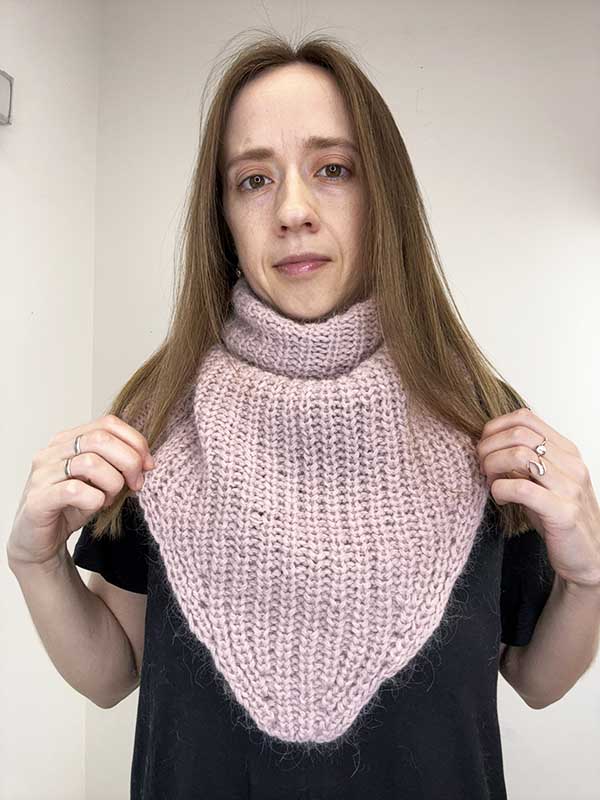
Row 8: Repeat Row 6.
Row 9: Repeat Row 5.
Row 10: sel s, k1b, p1, inc, p1, k1b, p1, inc, p1, k1b, sel s. (15)
Row 11: sel s, [p1, k1] – repeat 6 times, p1, sel s. (15)
Row 12: sel s, [k1b, p1] – repeat 6 times, k1b, sel s. (15)
Row 13: Repeat Row 11.
Row 14: Repeat Row 12.
Row 15: Repeat Row 11.
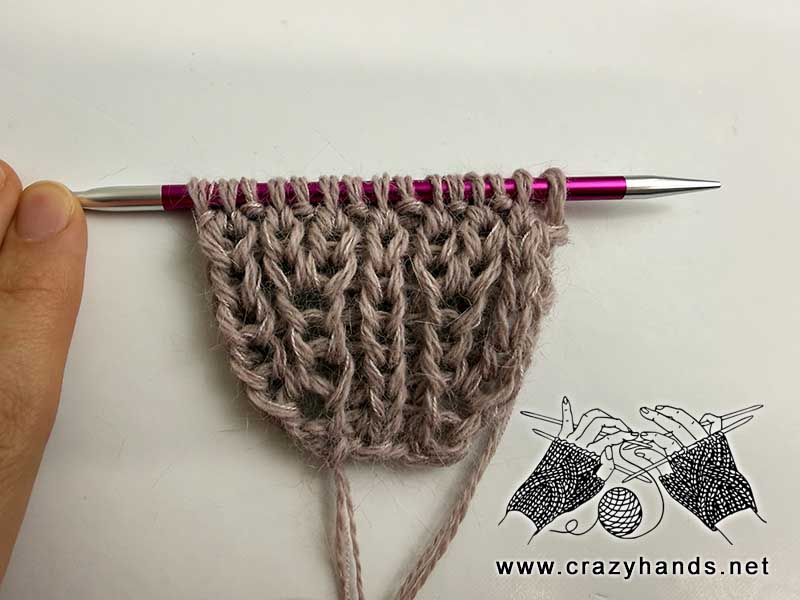
Row 16: sel s, k1b, p1, k1b, p1, inc, p1, k1b, p1, inc, p1, k1b, p1, k1b, sel s. (19)
Row 17: sel s, [p1, k1] – repeat 8 times, p1, sel s. (19)
Row 18: sel s, [k1b, p1] – repeat 8 times, k1b, sel s. (19)
Row 19: Repeat Row 17.
Row 20: Repeat Row 18.
Row 21: Repeat Row 17.
Continue working the increases in the same manner. You will notice that in Row 4 the increases were worked into the 1st knit stitch at the beginning of the row and, symmetrically, into the 1st knit stitch from the end.
In Row 10 the increases were worked into the 2nd knit stitch at the beginning and, symmetrically, into the 2nd knit stitch from the end.
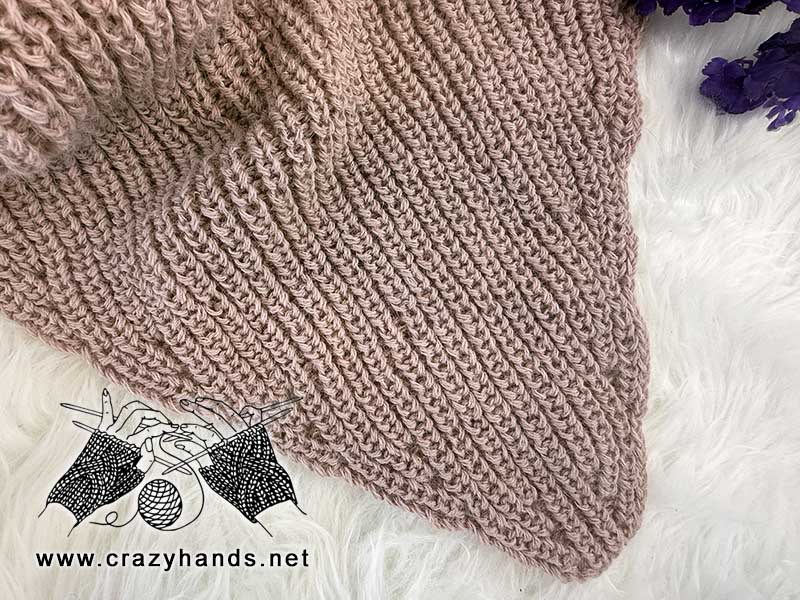
In Row 16 the increases were worked into the 3rd knit stitch at the beginning and, symmetrically, into the 3rd knit stitch from the end.
Continue in this sequence: in Row 22 work the increases into the 1st knit stitch at the beginning and at the end, in Row 28 into the 2nd, and so on. Increases are made only within the first 3 knit stitches and the last 3 knit stitches of the row.
Make increases until the height of the baktus reaches 65 cm (25 in). The final width of my baktus after blocking is 130 cm (51 in). The final stitch count isn’t important, just stop increasing once the baktus reaches the required height.
For this baktus, I worked increases every 6 rows. If you want your baktus to be wider but shorter, work the increases every 4 rows instead.
Last Row: bind of all stitches. Here I recommend using an elastic bind off method.
For an elastic bind-off, slip 1st selvage. If the next stitch is a knit, ryo, k1, then pass the slipped stitch and the ryo over the knit stitch. If the next stitch is a purl, yo, p1, then pass the slipped stitch and the yo over the purled stitch. Repeat in this way to bind off all stitches to the end. Check the video tutorial for more instructions. Weave in all ends, then wash and dry flat.